Apparently, Lucy didn’t think one season was enough.
When I decided to turn an old essay about a little Yorkie into a children’s book, I thought I had found a nice retirement project. Write the story, create the illustrations, figure out how to publish it, and put a copy in my grandchildren’s hands.
That sounded manageable.
Then Lucy met Sammy the squirrel, and apparently neither of them was ready to leave the backyard after one book.
The first story took place in fall. But once I started thinking about their friendship, I could picture them together in winter, spring, and summer. The seasons gave me four different settings to explore with the same two little friends. Before long, my one-book project had become the four seasons of Lucy and the Squirrel.
There is something comforting about familiar characters. When children open another book and recognize Lucy and Sammy, they already have friends waiting for them. They can wonder what those friends will do next. As the writer, I also get to know the characters better each time I return to them.
Of course, familiarity only gets you so far. Changing the leaves to snow does not automatically give you a new story. Each book needs its own adventure, a reason to turn the page, and an ending that feels satisfying. I want children to enjoy spending more time with Lucy and Sammy, but I have to give those two something worth doing.
Then there are the illustrations.
Lucy needs to look like Lucy throughout all four books. Sammy cannot suddenly look like a distant cousin who wandered into the picture. Their size, markings, expressions, and personalities need attention from page to page. I discovered that creating a series means keeping track of a surprising number of details. My years of reviewing specifications turned out to be useful. Apparently, retirement still involves checking the paperwork.
I also want each book to stand on its own. A family might discover the winter book first. They should be able to enjoy it without needing to buy fall or wondering what they missed. Reading all four can add to the pleasure but reading one should still feel complete.
A standalone book lets you tell a story and bring it to a close. A series gives you room to return, explore, and watch a friendship grow. It also gives you more work, more decisions, and more opportunities to discover something you overlook.
For me, Lucy’s four seasons have been worth that extra effort. What began as one small project became four books I could share with my grandchildren.
I just need to be careful about asking Lucy what she would like to do next.
106
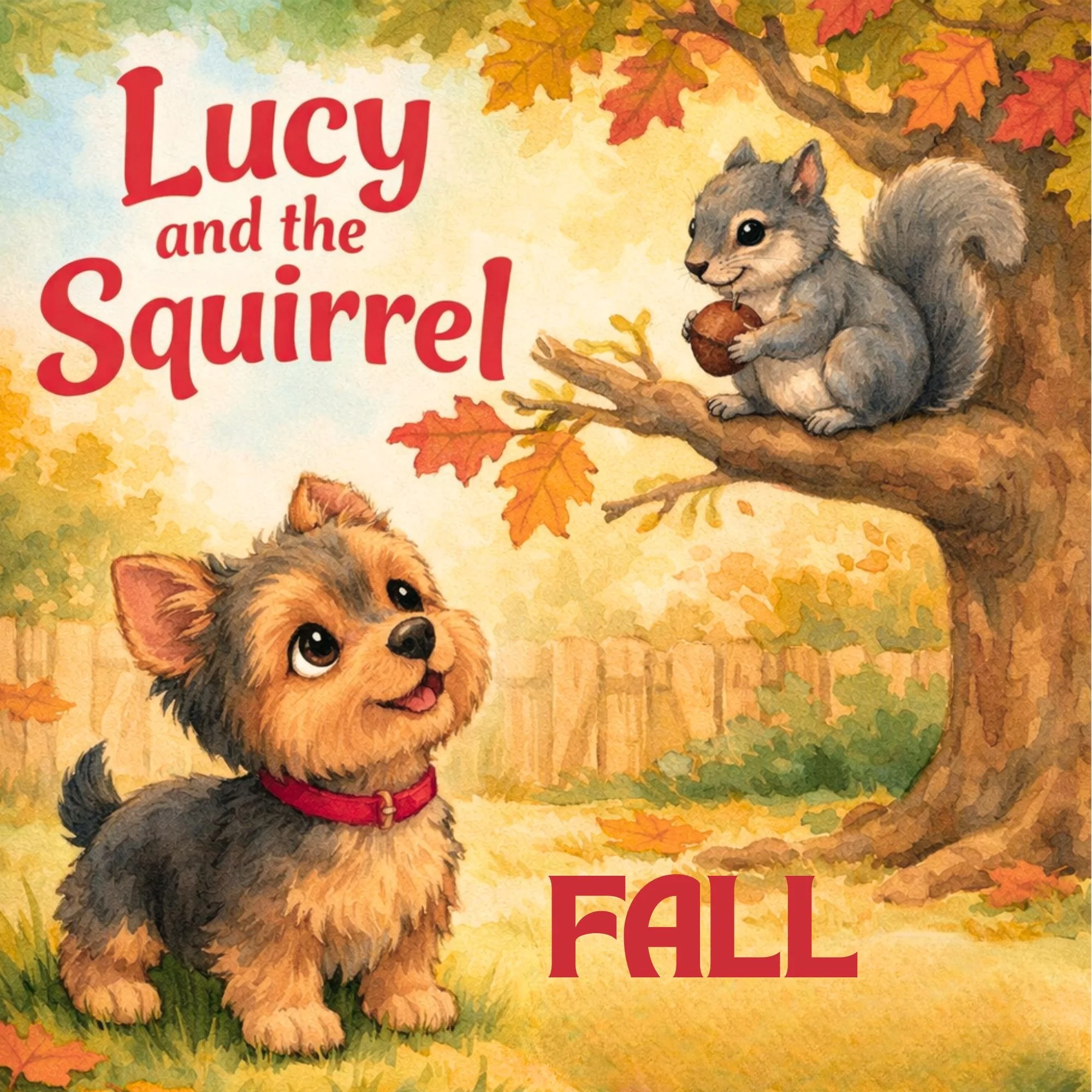
The book that started it all.
Lucy and Sammy
