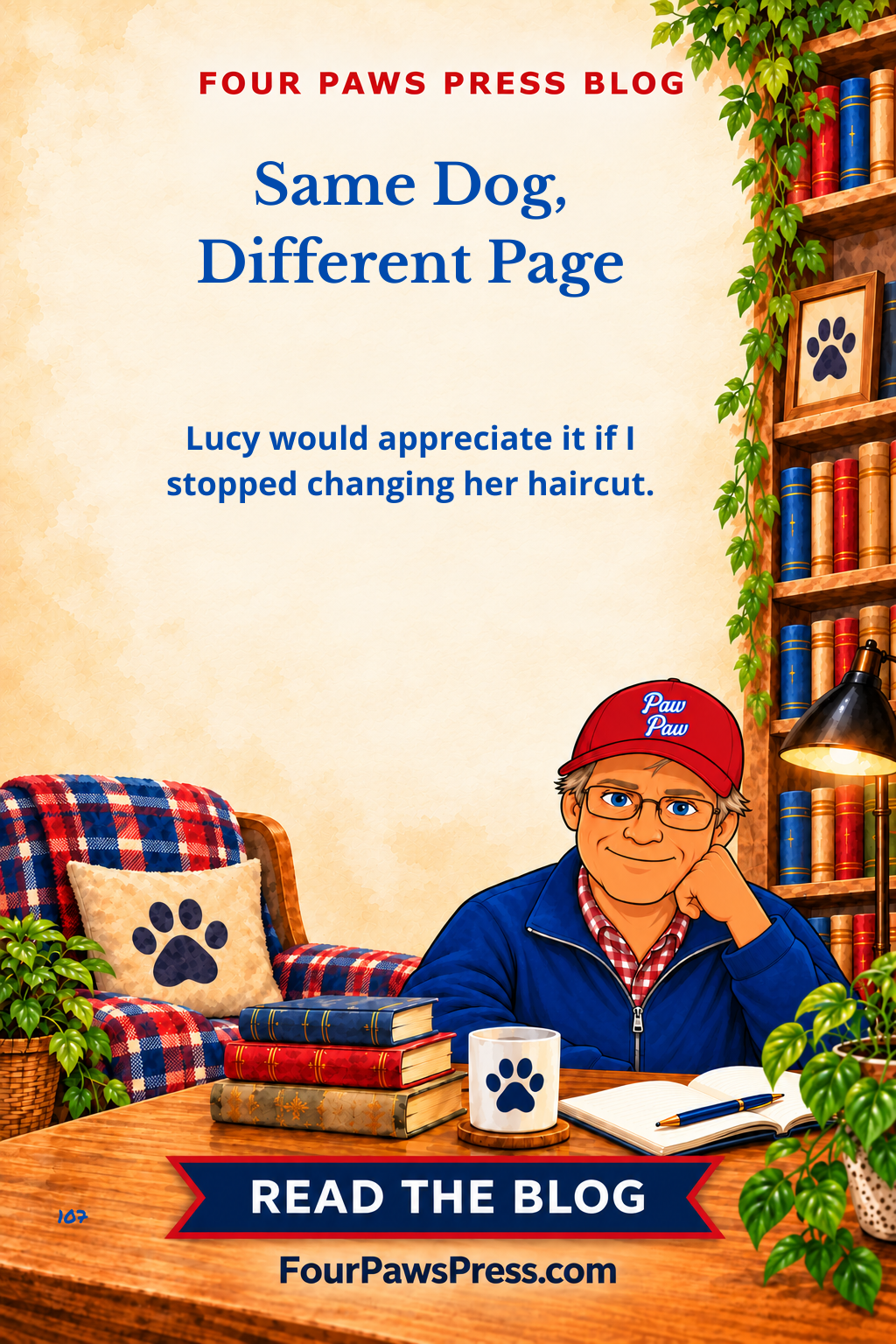
Lucy would appreciate it if I stopped changing her haircut.
When I began illustrating Lucy and the Squirrel, I thought the challenge would be creating a picture of a cute Yorkie and a friendly squirrel.
It turns out the bigger challenge was creating the same cute Yorkie and friendly squirrel again. And again. Through an entire book. Then through three more.
A single illustration can look wonderful on its own. Put it beside another, however, and you may start asking questions. Why are Lucy’s ears different? Has Sammy gained weight? And who gave the dog a haircut between pages?
Children might not describe those differences the way an illustrator would, but they know their friends. Once they recognize Lucy, I want them to keep recognizing her. They should be following the adventure, not wondering whether a different dog has taken over the story.
I learned that “a Yorkshire Terrier” was not a complete enough description. It left too much room for interpretation. Lucy needed specific features that carried from one illustration to the next. Sammy needed the same attention. Their proportions, coloring, tails, and familiar expressions all helped establish who they were.
Reference images became useful companions to the written instructions. Instead of explaining everything from scratch, I could point back to an approved image and use it as a guide. Character descriptions helped me keep track of details I might otherwise forget.
That sounds organized. It also sounds suspiciously like the specifications and configuration control I thought I had retired from.
The trick was keeping the characters consistent while letting them act. Lucy could be curious, surprised, excited, or a little disappointed. Sammy could move, play, and react. I didn’t want every page to look like the same picture with a different background. Their appearance needed to stay familiar while their expressions and poses helped tell a fresh part of the story.
Some details could change for a reason. Winter clothing belongs in winter. Other changes were simply mistakes that needed correcting. Learning to distinguish between the two became part of reviewing each illustration.
I also discovered that liking a picture was not enough. Sometimes a lovely illustration needed another round of work because Lucy didn’t quite look like Lucy. That can be frustrating when everything else in the scene feels right. But placing it in the book would only make the difference more noticeable.
Across the four seasons, those checks became increasingly important. Each new book brought another opportunity to lose track of a detail, but also another chance to get better at the process.
What started as a technical challenge became part of caring for the characters. Lucy and Sammy were becoming familiar friends for the children reading their stories, including my grandchildren.
I wanted those friends to show up looking like themselves.
Lucy already has enough to do keeping up with a squirrel. She shouldn’t have to explain a new haircut on every page.